
INTRODUCTION
Prescription practices form the core of clinical decision making and directly influence patient safety, treatment outcomes, and professional accountability. In India, growing concerns around irrational drug use, antimicrobial resistance, rising healthcare costs, and patient harm have led to increased regulatory focus on prescription rules and anti overprescribing norms. For doctors and hospitals, adherence to rational prescribing practices is no longer only a matter of clinical ethics. It has become a critical medico legal and regulatory obligation.
In 2026, prescription related scrutiny has intensified across medical councils, consumer courts, hospital audits, and insurance claim assessments. Understanding prescription regulations in India and aligning daily practice with approved drug prescription policy standards is essential to safeguard professional credibility and reduce legal exposure.
REGULATORY FRAMEWORK GOVERNING PRESCRIPTIONS IN INDIA
Prescription regulations in India are guided by multiple authorities including the National Medical Commission, the Drugs and Cosmetics Act, the Clinical Establishments framework, and public health advisories issued by central and state governments. These regulations collectively define how medicines should be prescribed, dispensed, and documented.
Doctors are expected to prescribe drugs based on accepted clinical guidelines, approved indications, and evidence based protocols. Prescriptions must include clear dosage, duration, and instructions, while avoiding unnecessary or irrational drug combinations.
Failure to comply with prescription regulations may attract disciplinary action, regulatory notices, or allegations of negligence and deficiency in service.
WHAT CONSTITUTES RATIONAL PRESCRIBING PRACTICES
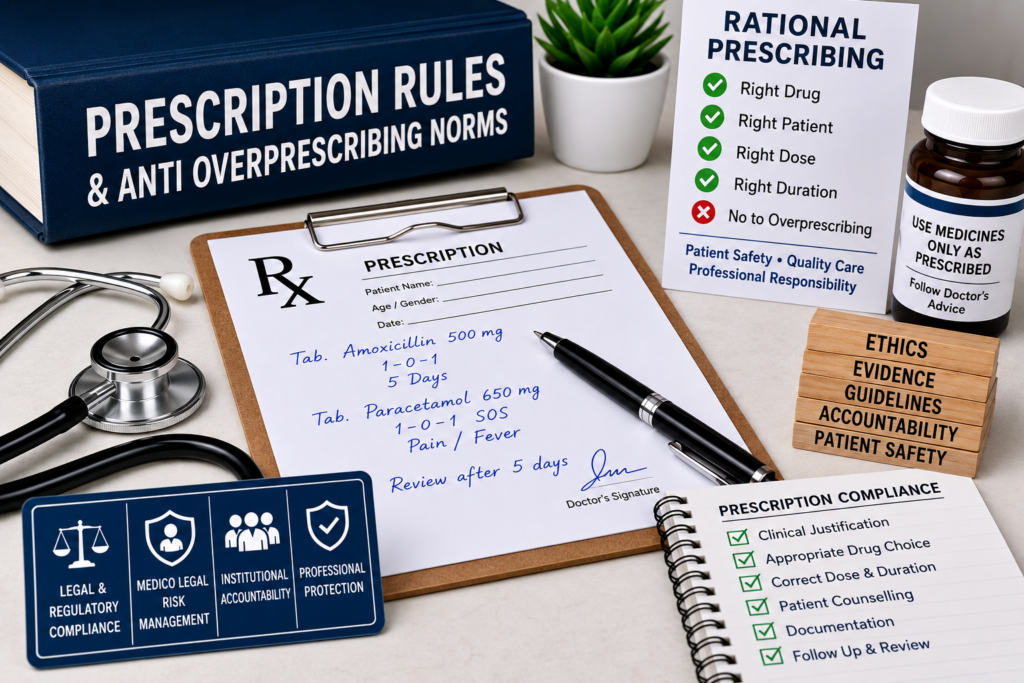
Rational prescribing practices are grounded in selecting the right medicine for the right patient at the right dose for the right duration, while considering safety, efficacy, and affordability.
Key principles of rational prescribing include
• Prescribing based on confirmed diagnosis or reasonable clinical assessment
• Avoiding unnecessary polypharmacy
• Choosing drugs with proven efficacy and safety profiles
• Limiting use of antibiotics, steroids, and high risk medications unless clinically justified
• Ensuring patient understanding and adherence
Rational prescribing protects patients from adverse drug reactions and doctors from allegations of over treatment or commercial influence.
OVERPRESCRIBING AS A GROWING MEDICO LEGAL RISK
Overprescribing refers to the use of medicines that are not clinically indicated, prescribed for excessive duration, or administered at inappropriate dosages. It is increasingly viewed as a form of professional misconduct when unsupported by clinical rationale.
Common triggers for overprescribing related complaints include
• Routine antibiotic use for viral infections
• Excessive use of injections when oral alternatives exist
• Long term steroid prescriptions without monitoring
• Prescribing multiple brand combinations without necessity
• Unjustified continuation of medications
Such practices may expose doctors to consumer complaints, insurance disputes, and regulatory scrutiny.
PRESCRIPTION AUDITS AND INSTITUTIONAL ACCOUNTABILITY
Hospitals and large clinics are increasingly subject to prescription audits by internal committees, accreditation bodies, and insurers. These audits assess compliance with drug prescription policy norms, antimicrobial stewardship guidelines, and ethical prescribing standards.
Institutional liability may arise when systemic overprescribing is identified, even if individual doctors are involved. Hospitals are expected to implement prescribing protocols, formularies, and review mechanisms to ensure consistency and compliance.
Structured prescription governance reduces institutional risk and supports quality assurance.
DOCUMENTATION AND DEFENSIVE PRESCRIBING
Clear documentation is the strongest defence against allegations of irrational prescribing. Doctors must ensure that clinical reasoning for drug choices is reflected in patient records, especially when prescribing high risk or restricted medications.
Documentation should include
• Diagnosis or provisional assessment
• Indication for prescribed drugs
• Duration and review plan
• Patient counselling notes
• Monitoring or follow up advice
Defensive prescribing does not mean excessive treatment. It means clinically justified decisions supported by documentation.
PRESCRIPTION RULES IN DIGITAL AND TELEMEDICINE PRACTICE
With the expansion of telemedicine, prescription regulations have gained additional complexity. Teleconsultation guidelines restrict the categories of drugs that can be prescribed without physical examination.
Doctors must adhere to approved drug lists and avoid prescribing controlled substances or high risk medications through online consultations unless permitted by guidelines.
Digital prescriptions must be legible, traceable, and securely shared. Non compliance in telemedicine prescribing is a common trigger for regulatory action and patient complaints.
IMPACT OF IRRATIONAL PRESCRIBING ON INSURANCE AND CLAIMS
Prescription practices increasingly influence insurance claim assessments. Insurers may scrutinise treatment protocols, duration of medication, and drug choices while evaluating claims, especially in high value hospitalisations.
Unjustified prescriptions may lead to claim queries, partial disallowances, or disputes. For hospitals, repeated prescription related claim issues may affect network status and credibility.
Aligning prescribing practices with accepted standards protects both clinical outcomes and financial processes.
ETHICAL CONSIDERATIONS AND PROFESSIONAL RESPONSIBILITY
Ethical prescribing is central to the doctor patient relationship. Prescribing influenced by non clinical factors such as incentives, brand pressure, or defensive habits undermines trust and professional integrity.
Medical councils and ethics committees increasingly emphasise transparency and accountability in prescribing behaviour. Violations may attract disciplinary proceedings beyond civil liability.
Doctors must remain conscious that every prescription reflects professional judgement and ethical responsibility.
ROLE OF TRAINING AND INSTITUTIONAL PROTOCOLS
Continuous professional development plays a vital role in improving prescribing quality. Updated knowledge on guidelines, resistance patterns, and regulatory changes supports safe practice.
Hospitals should invest in
• Standard treatment protocols
• Prescription review committees
• Antimicrobial stewardship programmes
• Periodic audit and feedback mechanisms
Institutional support strengthens individual compliance and reduces medico legal exposure.
HOW MEDICO LEGAL RISK MANAGEMENT SUPPORTS PRESCRIBING PRACTICES
Prescription related disputes often escalate due to lack of preparedness rather than actual negligence. Structured medico legal risk management helps doctors and hospitals respond appropriately to allegations.
Advisory led platforms such as PolicyEra support healthcare professionals by
• Aligning professional indemnity coverage with prescribing risks
• Offering guidance on documentation and compliance standards
• Supporting legal response in prescription related complaints
• Integrating risk awareness into clinical governance
This approach ensures that rational prescribing is supported not only clinically but also legally and financially.
PRESCRIPTION PRACTICES AS A LONG TERM PROFESSIONAL SAFEGUARD
Adhering to prescription rules is not a restrictive obligation but a long term professional safeguard. It protects patient safety, reduces litigation risk, and strengthens institutional reputation.
Doctors who practise rational prescribing are better positioned to defend their decisions, maintain patient trust, and adapt to evolving regulatory expectations.
Hospitals that prioritise prescription governance demonstrate commitment to ethical care and regulatory compliance.
CONCLUSION
Prescription rules and anti overprescribing norms have become central to medical accountability in India. In an era of heightened scrutiny, rational prescribing practices are essential for patient safety, professional credibility, and medico legal protection.
Doctors and hospitals must view prescription compliance as an integral part of clinical excellence rather than administrative burden. Through informed decision making, clear documentation, and structured risk management support, healthcare professionals can practise confidently while meeting regulatory and ethical expectations.
With advisory aligned protection and a proactive approach to medico legal preparedness, rational prescribing becomes a foundation for sustainable and responsible medical practice.
FAQs
1. Why Did My Pharmacist Question My Prescription?
Pharmacists are trained to check for drug interactions, dosage errors, or unnecessary combinations as an additional safety check before dispensing. If they question a prescription, it usually means they're verifying that it aligns with rational prescribing standards and patient safety norms.
2. Can I Ask My Doctor Why They're Prescribing This Medication?
Yes, patients have every right to ask their doctor about the diagnosis, purpose, and expected duration of any prescribed medication. Transparent communication is part of ethical prescribing and helps build trust between doctor and patient.
3. What Should I Do If My Doctor Prescribes Too Much Pain Medication?
If you feel a prescription seems excessive, it's advisable to discuss your concerns directly with your doctor or seek a second opinion. Overprescribing of pain medication without proper monitoring can pose health risks and may also be flagged under anti-overprescribing norms.
4. Will a Drug Test Show My Prescription Medications?
Yes, many drug tests can pick up prescription medications, especially controlled substances. It's best to carry your prescription or inform the tester beforehand to avoid confusion.
5. What Should I Tell My Employer About My Prescriptions?
You only need to mention medications that could affect your work, like something that causes drowsiness in a safety-critical role. Otherwise, your prescription details are pretty much your own business.

