
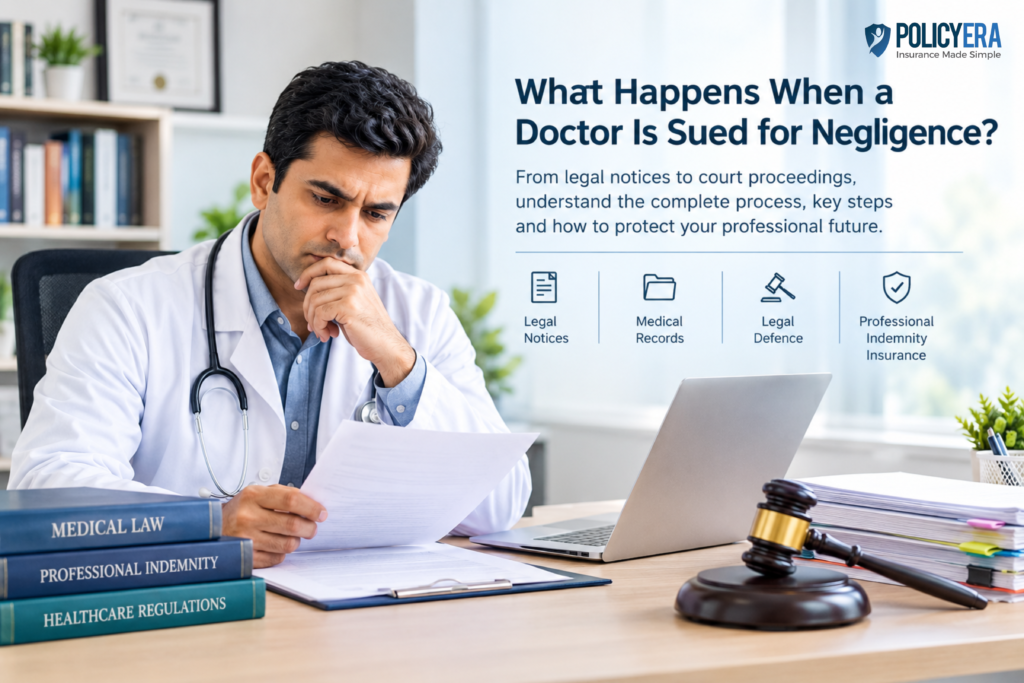
What Happens When a Doctor Is Sued for Negligence?
When a doctor is sued for negligence, it means a patient or their family has alleged that the doctor failed to provide the expected standard of medical care, resulting in injury, complications, financial loss, or even death. A negligence allegation can be stressful for doctors because it may involve legal notices, court proceedings, reputational damage, and financial liabilities.
A doctor sued for negligence does not automatically mean the doctor is guilty. Medical treatment involves risks, complications, and unpredictable outcomes. The legal system evaluates whether the doctor followed accepted medical practices and whether the alleged harm was directly caused by negligence.
Doctors can protect themselves from such situations through proper documentation, legal representation, and professional indemnity insurance, which helps cover legal expenses and claim liabilities arising from medical negligence allegations.
What Is a Medicolegal Case?
A medicolegal case is a situation where medical treatment becomes connected with legal proceedings. It generally occurs when a patient alleges that a healthcare professional’s action, decision, or omission caused harm.
A medicolegal case may involve:
- Alleged wrong diagnosis
- Delay in treatment
- Surgical mistakes
- Incorrect medication or dosage
- Failure to obtain informed consent
- Negligent post-operative care
- Improper documentation
For doctors, handling a medicolegal case requires careful legal defence because medical decisions are evaluated based on expert opinions, medical records, and accepted standards of practice.
A doctor facing a medicolegal case should immediately preserve all medical records, communicate only through proper legal channels, and inform their professional indemnity insurer if they have coverage.
Step-by-Step Process When a Doctor Is Sued for Negligence
1. Receiving a Legal Notice or Patient Complaint
The first stage when a doctor is sued for negligence usually begins with receiving a legal notice from the patient, their family, a consumer forum, or a court.
The notice may mention:
- Details of the alleged negligence
- Medical treatment provided
- Compensation demanded
- Legal action being initiated
At this stage, doctors should avoid directly admitting fault or making statements without legal advice.
2. Investigation of Medical Records
After a complaint is filed, the medical records become the most important evidence.
Documents reviewed may include:
- Patient history
- Investigation reports
- Consent forms
- Prescription records
- Operation notes
- Discharge summaries
- Follow-up records
In a medicolegal case, proper documentation often becomes the strongest defence for doctors.
3. Appointment of Legal Defence
When a doctor is sued for negligence, the doctor generally requires professional legal assistance from advocates experienced in healthcare laws.
The defence team analyses:
- Whether medical protocols were followed
- Whether complications were known risks
- Whether negligence directly caused damages
Whether proper consent was obtained
4. Court Proceedings and Trial Defence
During court proceedings, both sides present evidence. Medical experts may be consulted to determine whether the treatment provided met acceptable medical standards.
The doctor’s defence generally focuses on proving:
- Appropriate diagnosis was performed
- Standard treatment protocols were followed
- Complications occurred despite reasonable care
- There was no direct negligence causing damage
A doctor sued for negligence must demonstrate that reasonable care and professional judgment were exercised during treatment.
Medico Legal Cases Examples:
Realistic Claim Scenarios Doctors Should Understand
Understanding medico legal cases examples helps doctors recognize common situations that may result in legal complaints.
Below are some common claim scenarios:
Facial Paralysis After Treatment
Allegation:
A patient alleges that negligent treatment resulted in facial paralysis and consequential damages.
Claim Situation:
The patient claims that improper medical management caused permanent facial nerve damage, leading to disability, emotional distress, and financial loss.
Defence Considerations:
The doctor may need to establish:
- The procedure was performed according to accepted medical standards
- The risk of nerve injury was explained
- Proper consent was obtained
- The complication was a known medical possibility
This is one of the common medico legal cases examples where documentation and expert medical opinion play a crucial role.
Surgical Error Leading to Septic Shock and Death
Allegation:
A patient’s family alleges that a faulty surgical procedure resulted in septic shock and death.
Claim Situation:
The allegation may involve improper surgical technique, infection control issues, delayed intervention, or inadequate post-operative monitoring.
Defence Considerations:
The medical team may need to prove:
- Proper surgical protocols were followed
- Infection prevention measures were implemented
- Patient condition and risks were properly monitored
- All necessary emergency steps were taken
Such medico legal cases examples highlight why hospitals and surgeons require adequate legal protection.
Fournier’s Gangrene Due to Improper Surgery
Allegation:
The patient alleges that improper surgery resulted in Fournier’s gangrene and severe complications.
Claim Situation:
The complaint may state that delayed diagnosis, improper wound management, or surgical negligence caused the condition to worsen.
Defence Considerations:
The doctor may present:
- Medical history of the patient
- Treatment timeline
- Investigation reports
- Emergency management records
A detailed medical record can significantly impact the outcome of a medicolegal case.
Eye Surgery Complication
Allegation:
A patient alleges that surgical error during an eye operation caused permanent damage.
Claim Situation:
The patient may claim loss of vision, additional treatment expenses, and emotional suffering.
Defence Considerations:
The doctor may demonstrate:
- Proper surgical procedure followed
- Patient was informed about possible risks
- Appropriate post-operative care was provided
Eye-related claims are among the sensitive medico legal cases examples because vision-related damages can result in significant compensation demands.
How Professional Indemnity Insurance Helps Doctors During Negligence Claims
When a doctor is sued for negligence, professional indemnity insurance becomes an important financial protection tool.
Professional indemnity insurance provides coverage against claims arising from professional mistakes, errors, or alleged negligence during medical practice.
Professional Indemnity Insurance Examples
Some common professional indemnity insurance examples include:
Example 1: Surgical Negligence Claim
A surgeon faces a compensation claim alleging negligence during an operation. The insurance policy may help cover legal defence expenses and settlement costs according to policy terms.
Example 2: Wrong Diagnosis Allegation
A physician is accused of delayed diagnosis resulting in patient complications. Professional indemnity insurance can support legal defence requirements.
Example 3: Treatment Complication Claim
A specialist faces allegations that treatment resulted in unexpected complications. The policy may provide financial assistance for defending the claim.
These professional indemnity insurance examples demonstrate how doctors can manage financial risks associated with legal complaints.
Why Doctors Should Maintain Professional Indemnity Insurance
Medical professionals face increasing legal risks due to:
- Rising patient awareness
- Increasing healthcare litigation
- Higher compensation demands
- Complex treatment procedures
A doctor sued for negligence may face expenses related to:
- Advocate fees
- Court expenses
- Expert opinions
- Compensation payments
- Investigation costs
Professional indemnity insurance helps doctors focus on patient care while having financial support during unexpected legal challenges.
How Doctors Can Reduce the Risk of Medicolegal Cases
Doctors can minimise the chances of a medicolegal case by following these practices:
Maintain Complete Medical Documentation
Detailed records help prove that appropriate care was provided.
Obtain Proper Patient Consent
Informed consent protects both doctors and patients by ensuring transparency.
Follow Standard Medical Guidelines
Following accepted protocols strengthens the doctor’s defence.
Communicate Clearly With Patients
Clear communication reduces misunderstandings and complaints.
Have Professional Indemnity Coverage
Insurance protection ensures financial support if allegations arise.
Conclusion
A doctor sued for negligence faces a challenging legal situation, but proper preparation, documentation, and professional support can significantly improve the defence process.
Understanding medicolegal case procedures, reviewing medico legal cases examples, and having suitable professional protection through professional indemnity insurance can help doctors safeguard their careers and financial future.
Medical practice involves responsibility, uncertainty, and risk. Professional indemnity insurance provides doctors with confidence to continue delivering healthcare services while being prepared for unexpected legal challenges.
FAQs
1. What happens when a doctor is sued for negligence?
When a doctor is sued for negligence, the process usually involves receiving a legal notice, investigation of medical records, appointment of legal counsel, and court proceedings if required.
2. Does being sued mean the doctor is guilty?
No. A doctor sued for negligence must be evaluated through legal procedures. The allegation must be proven with evidence showing deviation from accepted medical standards.
3. What are common examples of medicolegal cases?
Common medicolegal case examples include surgical complications, wrong diagnosis allegations, treatment errors, delayed medical intervention, and improper patient management.
4. Why do doctors need professional indemnity insurance?
Professional indemnity insurance protects doctors against financial losses arising from negligence claims, legal defence expenses, and compensation liabilities.
5. Do I Actually Have a Medical Malpractice Case? Understanding if Your Situation Qualifies Legally
You may have a medical malpractice case if you can establish that the healthcare professional failed to follow the accepted standard of medical care and that this failure caused injury, loss, or other harm. Medical negligence is generally assessed using medical records, expert opinions, treatment details, consent records, and evidence connecting the alleged negligence to the harm suffered.
6. How Much Money Can I Get From a Medical Malpractice Lawsuit?
There is no fixed compensation amount for a medical malpractice lawsuit. Compensation can depend on factors such as the nature and severity of the injury, medical expenses, financial losses, disability, and other damages established in the case. The final amount depends on the facts, evidence, applicable law, and decision of the relevant legal authority.
7. Medical Negligence vs. Bad Outcome: When Is a Doctor Legally Liable?
A bad medical outcome does not automatically mean medical negligence. Doctors may face complications or unexpected outcomes even when reasonable care and accepted treatment practices are followed. Legal liability generally depends on whether there was a departure from the accepted standard of care and whether that alleged negligence directly caused the patient's harm.
8. Do I Actually Have a Medical Malpractice Case? What Lawyers Really Look For
Lawyers generally examine the patient's medical records, treatment history, investigation reports, consent forms, prescriptions, operation notes, and follow-up records. They may also assess whether accepted medical protocols were followed, whether the complication was a known risk, and whether the alleged negligence directly caused the claimed damage.
9. How Much Money Can I Get From a Medical Malpractice Lawsuit?
The compensation in a medical malpractice lawsuit depends on the circumstances of each case. Factors may include the severity of the injury, treatment and recovery expenses, financial losses, disability, and the damages that can be established with evidence. Therefore, there is no universal compensation amount that applies to every medical negligence claim.

