
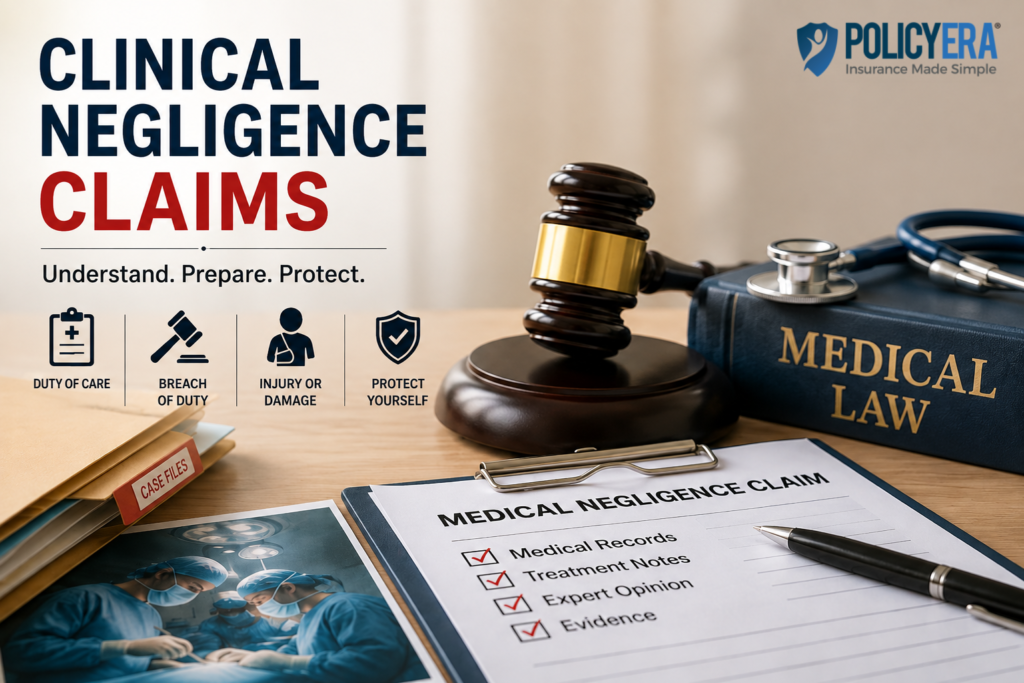
Understanding Clinical Negligence Claims in Healthcare
Healthcare professionals dedicate their lives to saving patients, but even with the highest level of care and expertise, unexpected medical complications can occur. When a patient or their family believes that harm has occurred due to a healthcare professional’s mistake, delay, or failure to follow accepted medical standards, they may initiate clinical negligence claims.
Clinical negligence claims arise when a patient alleges that a doctor, surgeon, hospital, or healthcare provider failed to provide the expected standard of care, resulting in injury, disability, or death.
In India, medical negligence cases are evaluated based on whether the healthcare professional acted according to reasonable medical practices followed by competent professionals in similar circumstances. Doctors and healthcare institutions must understand how these claims work and how they can protect themselves through proper risk management and professional indemnity cover.
What Are Clinical Negligence Claims?
Clinical negligence claims are legal claims made against healthcare professionals when a patient alleges that medical treatment caused avoidable harm due to negligence.
For a successful claim, the complainant generally needs to establish three important elements:
1. Duty of Care
A doctor-patient relationship creates a legal responsibility where the healthcare provider must provide treatment according to accepted medical standards.
2. Breach of Duty
The patient must prove that the healthcare professional failed to follow reasonable medical practices.
Examples may include:
- Incorrect diagnosis
- Surgical errors
- Medication mistakes
- Delay in treatment
- Failure to monitor patient condition
- Lack of informed consent
3. Injury or Damage
The claimant must demonstrate that the alleged negligence directly resulted in harm, financial loss, disability, or death.
A medicolegal case involving medical negligence requires detailed evaluation of medical records, expert opinions, treatment history, and clinical decisions taken by healthcare professionals.
How Clinical Negligence Claims Work in India
The process of clinical negligence claims generally involves multiple stages, from filing a complaint to legal assessment and final settlement.
Step 1: Patient or Family Raises an Allegation
The process usually begins when a patient or family member believes that medical treatment resulted in harm.
Common allegations include:
- Wrong treatment procedure
- Failure to diagnose a serious condition
- Incorrect medication dosage
- Negligence during surgery
- Poor post-operative monitoring
For example, allegations may arise after a kidney transplant where the patient's family claims that negligence during treatment contributed to the patient's death. Such situations become a complex medicolegal matter requiring investigation of medical records and professional decisions.
Common Scenarios Leading to Clinical Negligence Claims
1. Allegation of Negligence During Kidney Transplant Leading to Death
Organ transplant procedures involve significant medical complexity and require careful monitoring before, during, and after surgery.
A patient’s family may initiate clinical negligence claims if they believe:
- The transplant procedure was not performed according to accepted standards
- Proper precautions were not taken
- Post-operative complications were ignored
- Timely intervention was not provided
However, medical complications alone do not automatically prove negligence. Experts evaluate whether the healthcare team followed appropriate medical protocols.
Doctors involved in high-risk procedures should maintain detailed documentation and consider adequate professional indemnity cover to manage potential legal risks.
2. Allegation of Infant Death Due to Medical Negligence
Cases involving infants are highly sensitive because newborns require specialized medical attention.
A family may file a medicolegal case alleging negligence due to:
- Delay in emergency treatment
- Incorrect diagnosis
- Failure to monitor vital signs
- Medication errors
In such cases, investigations focus on whether the healthcare provider followed accepted pediatric care standards.
Maintaining accurate medical documentation is one of the strongest defenses for doctors facing clinical negligence claims.
3. Death of Minor Allegedly Due to Negligence and Lack of Proper Treatment
When a minor patient suffers severe complications or death, allegations may arise regarding delayed treatment or improper medical decisions.
A medicolegal investigation may review:
- Patient history
- Diagnosis process
- Treatment timeline
- Communication with parents
- Emergency response
Doctors should ensure transparent communication with patients and families while maintaining complete clinical records.
A suitable professional indemnity cover helps healthcare professionals handle legal expenses, defense costs, and compensation-related liabilities arising from such claims.
4. Excessive Medication Dosage Leading to Organ Failure and Death
Medication-related errors are among the serious allegations seen in clinical negligence claims.
Examples include:
- Incorrect dosage
- Wrong medication prescribed
- Failure to consider patient allergies
- Lack of monitoring after medication administration
If a patient suffers organ failure or death due to alleged medication errors, the matter may become a serious medicolegal case.
Healthcare providers must follow prescription protocols, maintain accurate records, and implement safety checks to reduce such risks.
Burden of Proof in Clinical Negligence Claims
In most medical negligence matters, the responsibility lies with the claimant to establish that negligence occurred.
The claimant generally needs to prove:
- A doctor-patient relationship existed
- The healthcare provider owed a duty of care
- The accepted medical standard was breached
- The breach caused injury or loss
Courts usually consider expert medical opinions before deciding whether negligence occurred. A negative treatment outcome does not always mean negligence. Medicine involves uncertainty, and doctors cannot guarantee successful results in every situation.
How Doctors Can Protect Themselves Against Clinical Negligence Claims
Medical professionals can take several preventive steps to reduce legal risks.
1. Maintain Complete Medical Documentation
Proper documentation is one of the most important protections for healthcare professionals.
Records should include:
- Diagnosis details
- Treatment plans
- Consent forms
- Medication history
- Patient communication
- Follow-up instructions
Complete documentation can provide strong evidence during a medicolegal case.
2. Follow Standard Treatment Guidelines
Doctors should follow recognized medical protocols and continuously update their knowledge.
Following accepted standards helps demonstrate that reasonable care was provided.
3. Obtain Professional Indemnity Cover
A professional indemnity cover is designed to protect doctors and healthcare professionals against financial risks arising from allegations of professional negligence.
A suitable professional indemnity cover may help with:
- Legal defense expenses
- Lawyer fees
- Settlement costs (as per policy terms)
- Compensation liabilities
Considering increasing awareness about patient rights and medical litigation, having appropriate professional indemnity cover has become an important risk management tool for healthcare professionals.
4. Improve Patient Communication
Many disputes escalate due to communication gaps.
Doctors should:
- Explain treatment risks
- Discuss possible complications
- Obtain informed consent
- Maintain transparency
Good communication can reduce misunderstandings and improve patient trust.
Role of Professional Indemnity Insurance in Managing Medicolegal Risks
Healthcare professionals operate in an environment where even an unexpected medical outcome can result in legal scrutiny.
A medicolegal issue can impact a doctor's:
- Professional reputation
- Financial stability
- Mental well-being
- Practice continuity
A reliable professional indemnity cover provides financial support and allows doctors to focus on defending their professional decisions. Whether it involves surgical procedures, diagnosis-related allegations, treatment delays, or medication-related incidents, having proper protection is an essential part of modern healthcare risk management.
Conclusion
Be Prepared Before Clinical Negligence Claims Occur
Medical professionals always aim to provide the best possible care, but healthcare involves inherent risks and uncertainties. Understanding how clinical negligence claims work helps doctors prepare better and manage potential legal challenges.
Cases involving kidney transplant complications, infant deaths, delayed treatment allegations, and medication errors highlight why healthcare professionals must prioritize documentation, patient communication, and risk protection.
A comprehensive professional indemnity cover acts as an important safety measure, helping doctors manage financial and legal challenges arising from a medicolegal case.
By combining ethical medical practices with proper insurance protection, healthcare professionals can continue delivering quality care with greater confidence.
FAQs
- Do I Have a Medical Negligence Case? How to Tell
You may have a medical negligence case if a healthcare professional failed to provide the accepted standard of care and this caused injury, loss, disability, or death. A claim generally involves three elements: duty of care, breach of duty, and resulting harm. Medical records, treatment history, clinical decisions, and expert medical opinions may help assess whether negligence occurred.
- What Counts as Clinical Negligence: Real Examples
Clinical negligence can include incorrect diagnosis, surgical errors, medication mistakes, delayed treatment, failure to monitor a patient, or lack of informed consent. However, a medical complication or unsuccessful treatment does not automatically mean negligence. The case must generally be assessed against accepted medical standards to determine whether the healthcare professional breached their duty of care.
- How Much Compensation Can I Get for Medical Negligence?
There is no fixed compensation amount for a medical negligence claim because the outcome depends on the circumstances and extent of the harm involved. Factors such as injury, financial loss, disability, or death may be considered during the assessment. The blog does not specify a particular compensation amount, as individual cases require detailed legal and medical evaluation.
- How Do I Know If I Have a Medical Negligence Claim?
You may have a clinical negligence claim when a doctor-patient relationship existed, the healthcare provider owed a duty of care, the accepted medical standard was breached, and that breach caused injury or loss. Medical records, treatment history, expert opinions, and clinical decisions can be reviewed to determine whether the circumstances support a potential medical negligence claim.
- What Are the First Steps After Experiencing Medical Negligence?
After an alleged medical negligence incident, maintaining complete medical documentation is an important first step. Keep records of diagnosis, treatment plans, consent forms, medication history, patient communication, and follow-up instructions. A complete treatment timeline and relevant medical records can help during a medicolegal assessment. Doctors should also follow appropriate treatment guidelines and maintain transparent communication with patients and families.
- How Much Does It Cost to Pursue a Clinical Negligence Claim?
The cost of pursuing a clinical negligence claim can vary, and this blog does not provide a specific fee or fixed cost. Clinical negligence matters may involve legal assessment, expert opinions, medical records, and other case-related requirements. For healthcare professionals, professional indemnity cover may help with eligible legal defence expenses, lawyer fees, settlement costs, and compensation liabilities, subject to policy terms.

