
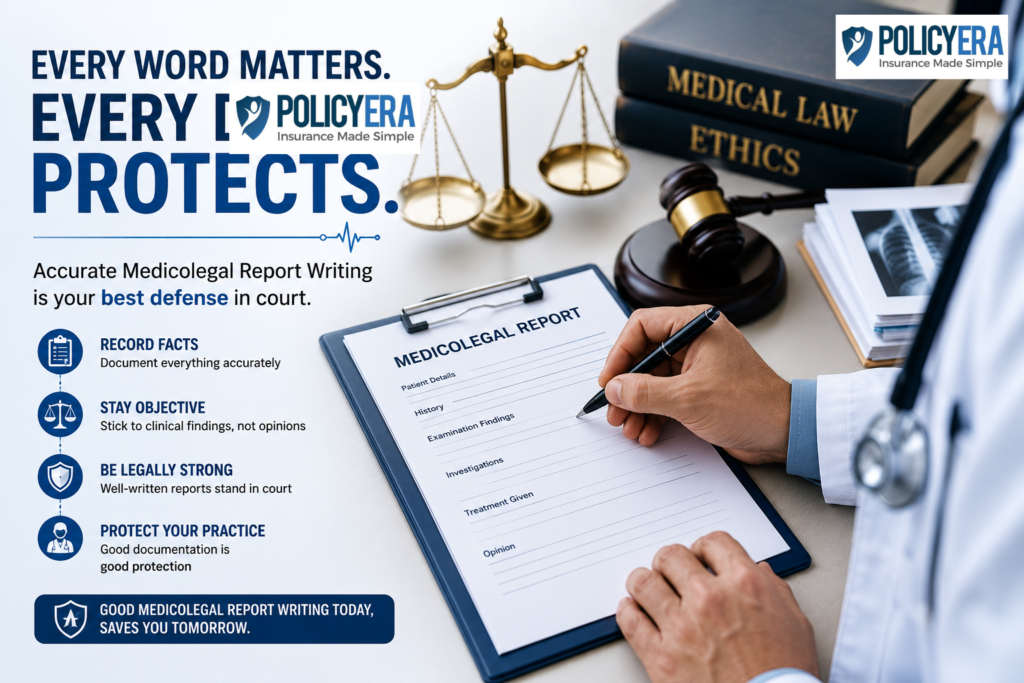
Medicolegal Report Writing: A Complete Guide for Doctors
In today's healthcare environment, medicolegal report writing has become one of the most important professional responsibilities for every doctor. Whether dealing with an unexpected patient death, responding to a police investigation, or defending against allegations of negligence, proper medicolegal report writing can significantly influence the outcome of a legal proceeding.
A well-prepared medicolegal report serves as an official document that accurately records clinical observations, treatment decisions, patient communication, and the sequence of medical events. Courts, police departments, insurance companies, and regulatory authorities often rely heavily on these reports when evaluating a medicolegal case.
This guide explains everything doctors need to know about medicolegal report writing, including essential components, common mistakes, legal considerations, and practical medico legal cases examples.
What is Medicolegal Report Writing?
Medicolegal report writing is the process of preparing a factual, objective, and legally acceptable medical report that documents clinical findings, treatment provided, patient history, investigations, and professional opinions whenever a medical incident has legal implications.
Unlike routine medical records, medicolegal report writing requires greater attention to detail because the document may later be scrutinized in court or during a police investigation.
Every doctor should understand that proper medicolegal report writing is not merely documentation—it's legal evidence.
Why Medicolegal Report Writing Matters
The quality of your medicolegal report writing may determine whether your clinical decisions can be successfully defended.
Proper documentation helps when:
- Police register an FIR against a doctor.
- Authorities request a doctor's statement.
- Courts seek medical evidence.
- Medical negligence is alleged.
- Insurance companies investigate claims.
- Hospital inquiries are conducted.
- Civil authorities request clarification.
Strong medicolegal report writing protects both patients and healthcare professionals.
Essential Components of Medicolegal Report Writing
Every medicolegal report writing document should include:
1. Patient Identification
Record:
- Full name
- Age
- Gender
- Hospital ID
- Date and time of admission
Accuracy is essential in every medicolegal document.
2. Clinical History
Mention:
- Presenting complaints
- Duration of illness
- Relevant medical history
- Previous treatment
- Consent obtained
Therefore, never rely on memory while performing medicolegal report writing.
3. Examination Findings
Document:
- Vital signs
- Physical examination
- Injuries
- Investigations
- Imaging findings
- Laboratory reports
Objective observations strengthen every medicolegal case.
4. Treatment Timeline
Clearly mention:
- Admission time
- Diagnosis
- Procedures performed
- Medications administered
- Specialist consultations
- Patient response
Chronological documentation improves the credibility of medicolegal report writing.
5. Professional Opinion
Your opinion should always be:
- Evidence-based
- Objective
- Within your specialty
- Supported by investigations
Avoid assumptions during medicolegal report writing.
Common Medicolegal Case Scenarios
Understanding real-life situations improves medicolegal report writing skills.
Scenario 1: Doctor Asked to Give Police Statement
A treating doctor receives notice from police after an FIR is registered regarding treatment provided.
In such a medicolegal case, the doctor should:
- Review complete records.
- Prepare factual documentation.
- Avoid speculation.
- Submit only evidence-based observations.
- Seek legal guidance if necessary.
Good medicolegal report writing ensures consistency between hospital records and police statements.
Scenario 2: Police and Civil Authority Inquiry
Authorities request clarification regarding treatment rendered during hospitalization.
Proper medicolegal report writing should include:
- Admission details
- Clinical progression
- Treatment decisions
- Consultant opinions
- Discharge summary
Accurate documentation often helps resolve a medicolegal case efficiently.
Scenario 3: Alleged Medical Negligence After Patient Death
One of the most sensitive medico legal cases examples involves allegations following a patient's death.
In such circumstances:
- Preserve all original records.
- Record the sequence of events.
- Document informed consent.
- Mention clinical deterioration objectively.
- Avoid retrospective alterations.
Strong medicolegal report writing becomes the doctor's best legal defense.
Best Practices for Medicolegal Report Writing
Follow these recommendations:
- Write immediately after clinical events.
- Use factual language.
- Avoid emotional statements.
- Never erase or overwrite records.
- Mention exact dates and times.
- Record discussions with patient relatives.
- Preserve investigation reports.
- Maintain confidentiality.
Professional medicolegal report writing reflects credibility and integrity.
Common Mistakes Doctors Should Avoid
Poor medicolegal report writing often includes:
- Missing timestamps
- Incomplete patient history
- Illegible handwriting
- Personal opinions
- Unsupported conclusions
- Missing signatures
- Altered records
- Missing consent documentation
These mistakes may weaken a medicolegal case before investigating authorities.
Importance of Documentation During Police Investigation
Whenever police seek clarification, your medicolegal report writing should match:
- Medical records
- Nursing notes
- Consent forms
- Investigation reports
- ICU charts
- Operation notes
Consistency strengthens every medicolegal defense.
How Courts Evaluate Medicolegal Reports
Courts generally examine whether the report:
- Is objective
- Is complete
- Matches hospital records
- Contains chronological documentation
- Includes scientific reasoning
- Is signed by the treating doctor
Well-prepared medicolegal report writing often carries substantial evidentiary value.
Medicolegal Case Documentation Checklist
Before submitting your report, verify:
- Patient identification complete
- Date and time recorded
- Clinical findings documented
- Treatment timeline complete
- Consent available
- Investigations attached
- Opinion evidence-based
- Signature included
This checklist helps improve medicolegal report writing quality.
Medico Legal Cases Examples
Some common medico legal cases examples include:
- Alleged delay in treatment
- Wrong diagnosis
- Medication error
- Surgical complications
- Consent disputes
- ICU management disputes
- Patient death allegations
- Police inquiries following emergency care
Learning from these medico legal cases examples helps doctors prepare better documentation for future incidents.
How Legal Guidance Supports Doctors
Doctors facing a medicolegal case should seek timely legal advice when:
- Police issue notices.
- Statements are requested.
- FIRs are registered.
- Civil authorities initiate inquiries.
- Medical negligence is alleged.
Professional legal guidance, combined with accurate medicolegal report writing, significantly improves preparedness during investigations.
Conclusion
Every healthcare professional should treat medicolegal report writing as an essential clinical skill rather than an administrative task. Accurate documentation, factual reporting, and timely record preparation not only improve patient care but also provide strong legal protection during investigations.
Whether responding to police authorities, preparing for court proceedings, or managing allegations of negligence, effective medicolegal report writing helps ensure that medical facts are presented clearly, objectively, and professionally. Learning from common medico legal cases examples and maintaining complete documentation can make a substantial difference in the outcome of any medicolegal case.
FAQs
- How Do Doctors Start Writing Medical Expert Reports?
Doctors should begin by reviewing the complete medical records and understanding the purpose of the report. The report should clearly present the patient's history, clinical findings, investigations, treatment timeline, and relevant medical opinions. Doctors should use factual, objective language and avoid assumptions or unsupported conclusions.
- What Should Be in a Court-Ready Medical Report?
A court-ready medical report should generally include patient identification, relevant medical history, examination findings, investigations, treatment details, a chronological timeline, and the doctor's professional opinion. The report should be accurate, objective, evidence-based, properly dated, and signed. Supporting medical records should also be preserved and referenced where appropriate.
- How Much Can Doctors Earn as Expert Witnesses?
Expert witness fees vary depending on the doctor's specialty, experience, complexity of the case, time involved, and type of assignment. Doctors may charge for reviewing medical records, preparing reports, consultations, and appearing as expert witnesses. There is no single standard fee, so compensation should be agreed upon before accepting the assignment.
- How Do I Become a Medical Expert Witness?
Doctors can begin by developing expertise in their specialty, gaining clinical experience, and understanding medical-legal principles. They should learn how to review records objectively, prepare professional reports, and communicate medical opinions clearly. Depending on the jurisdiction and assignment, additional training or professional requirements may apply.
- What's the Best Way to Write a Medical Report?
The best approach is to write the report in a clear, structured, chronological, and objective manner. Start with relevant patient information and medical history, followed by clinical findings, investigations, treatment provided, and your professional opinion. Avoid emotional language, speculation, unsupported conclusions, and retrospective changes to medical records.
- Can Doctors Make Extra Money as Expert Witnesses?
Yes, doctors may earn additional income by providing medical expert witness services. Depending on their expertise and the assignment, they may be compensated for medical record review, report preparation, consultations, and court appearances. However, doctors should ensure that their opinions remain independent, evidence-based, and within their professional expertise.

