
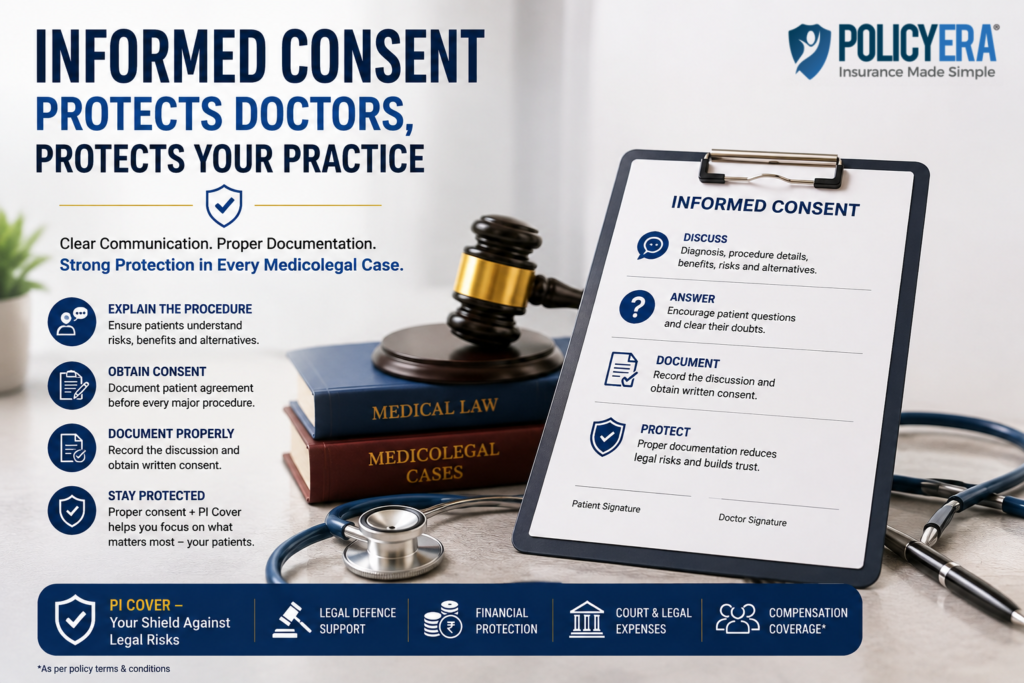
In today’s healthcare environment, medical professionals are not only responsible for providing the right treatment but also for ensuring proper communication and documentation with patients. One of the most important aspects of medical practice that can protect doctors from unnecessary legal disputes is obtaining proper informed consent.
Many doctors face a medicolegal case because of allegations that a patient was not adequately informed about a procedure, possible risks, alternative treatments, or expected outcomes. In several situations, the actual medical treatment may have been appropriate, but inadequate consent documentation creates legal complications. Understanding informed consent legal issues is essential for every doctor because proper consent acts as documented evidence that the patient understood and agreed to the proposed medical procedure.
What Is Informed Consent in Medical Practice?
Informed consent is a process where a doctor explains relevant medical information to a patient before performing any investigation, surgery, procedure, or treatment. The patient must understand the nature of the treatment, possible risks, benefits, alternatives, and consequences before giving approval.
Informed consent is not just a signature on a form. It is a communication process between the doctor and patient that demonstrates transparency and ethical medical practice.
In many medicolegal disputes, courts examine whether the patient was properly informed before deciding whether negligence occurred.
Why Informed Consent Legal Issues Can Create Problems for Doctors
Medical negligence claims are not always related to incorrect treatment. Sometimes, a doctor may face legal action because the patient claims that they were not informed about important aspects of the treatment.
Common informed consent legal issues include:
- Performing a procedure without documented patient approval
- Failure to explain possible risks and complications
- Not discussing available treatment alternatives
- Lack of proper consent records
- Consent taken from an unauthorized person
- Using technical medical language that the patient cannot understand
When such allegations arise, the absence of proper documentation can make it difficult for doctors to defend themselves during a medicolegal case.
Medicolegal Case Example 1: Dialysis Started Without Proper Consent
A common example involving informed consent legal issues is when dialysis treatment is initiated without obtaining proper consent from the patient or their family members.
Case Scenario:
A patient underwent dialysis treatment, but later alleged that they were not properly informed about the procedure, possible complications, long-term requirements, and financial implications.
The patient claimed physical suffering, mental stress, and financial loss due to the treatment decision.
Legal Concern:
The major allegation in such a medicolegal case was not only related to the treatment itself but whether the doctor properly explained:
- Why dialysis was required
- Possible risks involved
- Alternative treatment options
- Expected outcomes
- Financial considerations
Protection for Doctors:
Maintaining detailed consent documentation can help demonstrate that the patient was informed and voluntarily agreed to the treatment plan.
Medicolegal Case Example 2: Biopsy Conducted Without Patient Consent
Another important example of informed consent legal issues involves performing a biopsy without obtaining proper patient approval.
Case Scenario:
A patient underwent a biopsy procedure but later alleged that consent was not taken before the investigation.
The patient claimed negligence because they were unaware that such a procedure would be performed.
Legal Concern:
In such a medicolegal case, authorities generally examine:
- Was informed consent obtained before the biopsy?
- Was the procedure explained properly?
- Were risks and benefits communicated?
- Was the patient given an opportunity to ask questions?
Even when the biopsy was medically justified, failure to maintain consent records can create unnecessary legal exposure.
How Proper Consent Documentation Protects Doctors
Proper documentation is one of the strongest defenses available to doctors in a medicolegal case.
Doctors should maintain records including:
1. Detailed Explanation of Treatment
The consent process should mention:
- Diagnosis
- Proposed treatment
- Procedure details
- Expected benefits
- Possible complications
- Alternative options
2. Patient Understanding
Doctors should ensure that patients understand the information provided before signing consent documents.
3. Proper Documentation
Consent forms should include:
- Patient name
- Date and time
- Procedure details
- Doctor’s signature
- Patient or attendant signature
- Witness details wherever applicable
These records can become important evidence when dealing with medicolegal complaints.
Role of Professional Indemnity (PI) Cover for Doctors
Even with proper consent practices, doctors may sometimes face allegations from patients. Medical litigation can involve significant legal expenses, professional representation costs, and compensation claims.
This is where PI cover becomes important.
Professional Indemnity Insurance provides financial protection to doctors against claims arising from alleged professional negligence, errors, omissions, or legal disputes related to medical services.
A comprehensive PI cover can help doctors manage:
- Legal defence expenses
- Professional negligence claims
- Court-related expenses
- Compensation liabilities (as per policy terms)
However, maintaining proper consent practices remains one of the most important risk management steps for every healthcare professional.
Best Practices Doctors Should Follow to Avoid Consent-Related Legal Issues
To reduce the chances of a medicolegal case, doctors should follow these practices:
1. Communicate Clearly With Patients
Avoid complicated medical terminology. Explain procedures in simple language so patients can make informed decisions.
2. Document Every Important Discussion
Written records provide evidence that communication took place.
3. Take Consent Before Every Major Procedure
Consent should be obtained before surgeries, invasive procedures, investigations, and treatments involving significant risks.
4. Update Consent When Treatment Plans Change
If there is a major change in treatment, fresh consent should be considered.
5. Maintain Proper Medical Records
Complete documentation strengthens a doctor’s defence during a medicolegal dispute.
How Informed Consent Reduces Legal Risks for Doctors
A well-maintained consent process helps establish that:
- The patient was aware of the treatment
- Risks were properly explained
- Alternatives were discussed
- The patient voluntarily accepted the procedure
Therefore, understanding informed consent legal issues is not only an ethical responsibility but also an important legal safeguard.
Conclusion
Healthcare professionals dedicate themselves to patient care, but increasing legal awareness has made documentation and communication more important than ever.
Proper management of informed consent legal issues can significantly reduce unnecessary disputes and strengthen a doctor’s defence during a medicolegal case.
Along with ethical medical practices, maintaining comprehensive documentation and having adequate PI cover can help doctors protect their professional reputation, financial security, and future practice.
FAQs
- Can a Company Share My Job Application With Third Parties Without Permission?
An employer may share job application information with certain third parties for legitimate purposes such as background verification, recruitment services, or compliance requirements. However, the handling and sharing of personal data should follow applicable privacy laws and the terms communicated to the applicant. Candidates should review privacy notices and understand how their information may be collected, used, and shared.
- What Should I Do If an Employer Contacted My Previous Job Without My Consent?
If an employer contacts a previous employer without proper authorization, the candidate should first review the consent forms, employment application, and privacy policy provided during recruitment. If the contact was outside the agreed terms or involved improper disclosure of personal information, the candidate may raise the issue with the employer or seek appropriate legal advice regarding available remedies.
- Is It Legal for Employers to Use AI in Hiring Without Telling Me?
The use of AI in recruitment depends on applicable privacy, employment, and data protection laws. Employers should provide appropriate transparency about how candidate information is collected and processed, particularly when automated systems are used to evaluate applications or make hiring decisions. Candidates should check the employer's privacy notice for information about automated processing and their rights.
- How Do I Become a Medical Expert Witness?
Doctors interested in becoming a medical expert witness generally need relevant clinical expertise, professional experience, and a strong understanding of medical records and legal proceedings. They may assist lawyers and courts by providing objective opinions on medical standards, treatment, negligence, or causation. Additional training in medicolegal practice and experience in preparing reports and giving testimony can be valuable.
- What Does a Medicolegal Death Investigator Do?
A medicolegal death investigator examines deaths that may require legal or forensic investigation. Their responsibilities can include reviewing medical and death records, collecting information about the circumstances of death, interviewing relevant individuals, documenting evidence, and assisting medical examiners or coroners. The exact duties vary depending on the jurisdiction and investigating authority.
- How Much Can You Make as a Medical Expert Witness?
The income of a medical expert witness varies depending on medical specialty, professional experience, location, case complexity, and the type of work involved. Expert witnesses may charge for reviewing medical records, preparing reports, consultations, depositions, and court testimony. Fees can differ significantly between cases, so there is no fixed earning amount.

